

A common prognostication of commentators and news media outlets in Canada during the two-year war in Gaza was how isolated Israel had become – and was surely going to become – as a result of its supposedly heavy-handed war against Palestinian terrorists.
Promoters of this claim typically pointed to hostile votes at the United Nations (UN) and other such indicators, though they have been taking place for years, even generations.
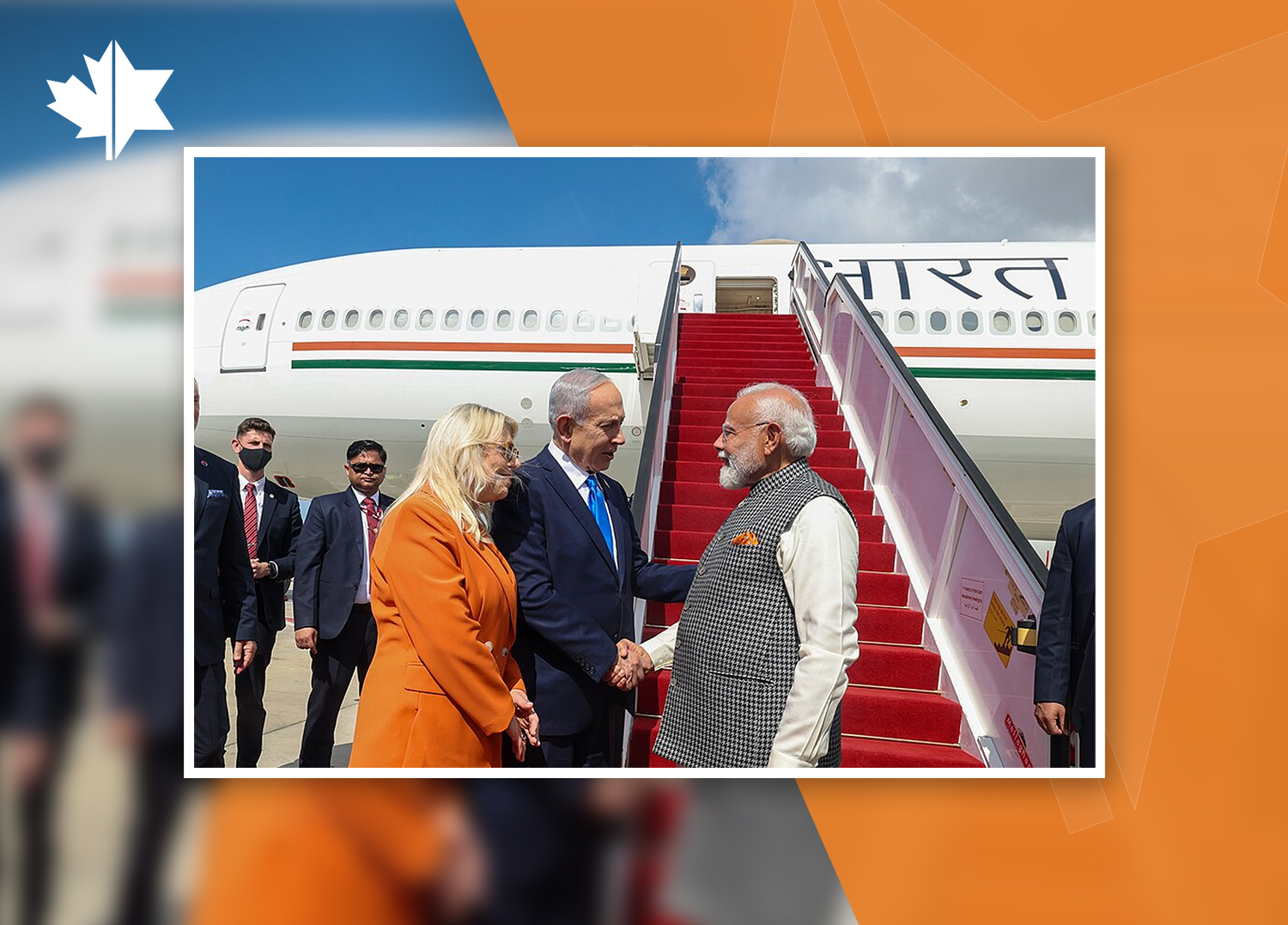
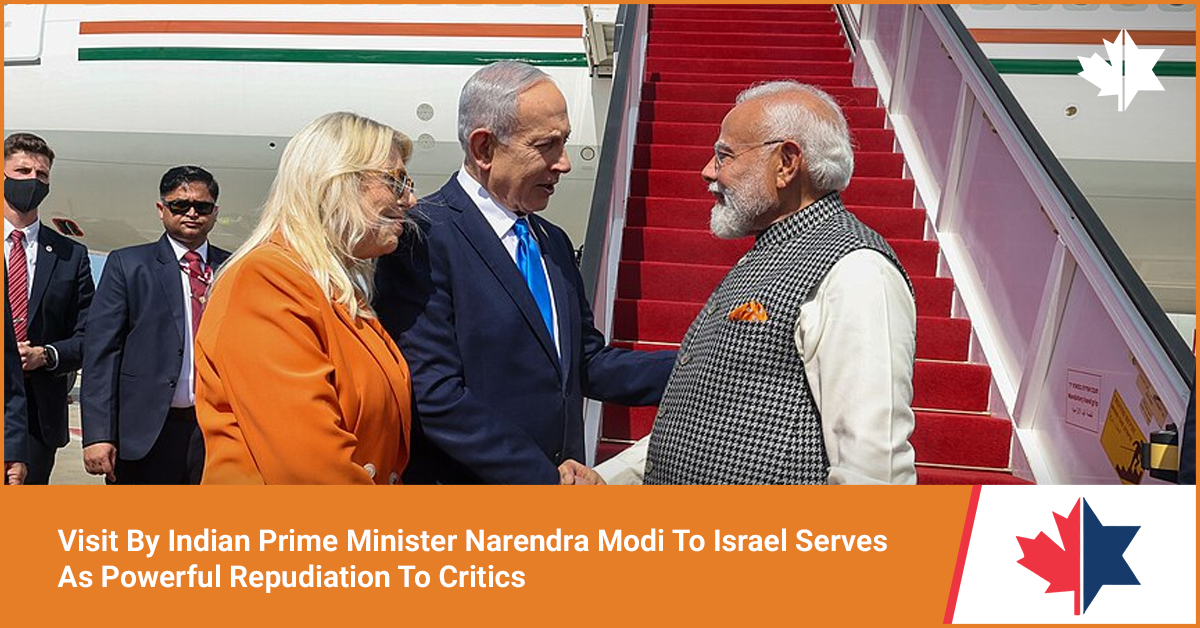
However, on February 24, that talking point was quickly put to rest with an official state visit by Indian Prime Minister Narendra Modi to Israel.
For more than 70 years, India has been the world’s largest democracy, and in 2023, it surpassed China to become the most populous country on the planet.
India’s significance is not simply demographic in nature. The country, with an economy roughly equivalent to Japan’s, is also among the world’s fastest-growing.
During his two-day visit to the Jewish State, Modi, who enjoys among the world’s highest domestic popularity ratings, met with hi-tech startups and signed a host of trade agreements.
But it was in his address to Israel’s Knesset (Parliament), where he made clear that the burgeoning ties between the two countries was not simply a recognition of the shared threat of Islamist radicalism and terrorism that both countries share. It was also an embrace of the shared democratic values of both states.
“In India, there is great admiration for Israel’s resolve, courage and achievements,” Modi told the Knesset, adding that ties between the two civilizations are not simply modern, but which “go back more than two thousand years,” and that New Delhi “stands with Israel firmly, with full conviction in this moment and beyond.”
Modi’s visit to Israel, while representing the most significant of its kind in recent months, is not the only rebuff of the ‘Israel-as-pariah’ worldview, particularly from the world’s newly industrializing countries.
In recent months, Israel’s president, Isaac Herzog, has visited a growing number of African countries, including Ethiopia, Zambia, and Somaliland, which Israel became the first country to recognize, in late December.
And in recent days, the head of Uganda’s military said the country would erect a statue of Yoni Netanyahu (brother of Israel’s current prime minister), who was killed in a 1976 counter-terrorism hostage rescue mission at Entebbe International Airport, “in order to strengthen our close blood relations with Israel.”
In South America, long a hotbed of anti-Israel radicalism from leaders, the tone has changed dramatically in recent months. Fanatical Chilean President Gabriel Boric was replaced in late 2025 with José Antonio Kast, who had openly accused his predecessor of anti-Jewish hate. In Bolivia, newly-elected president Rodrigo Paz restored diplomatic relations with Israel, which had been cut by previous President Luis Arce.
Other South American leaders, including Argentinian President Javier Milei, and Paraguayan President Santiago Peña, have been vocal in their support for Jerusalem, with Buenos Aires promising to move its embassy to Jerusalem in the near future.
While anti-Israel activists have long predicted the country’s isolation was just around the corner, India’s prime minister represents just the latest in a long string of repudiations to that comforting, yet entirely fictitious, narrative.


